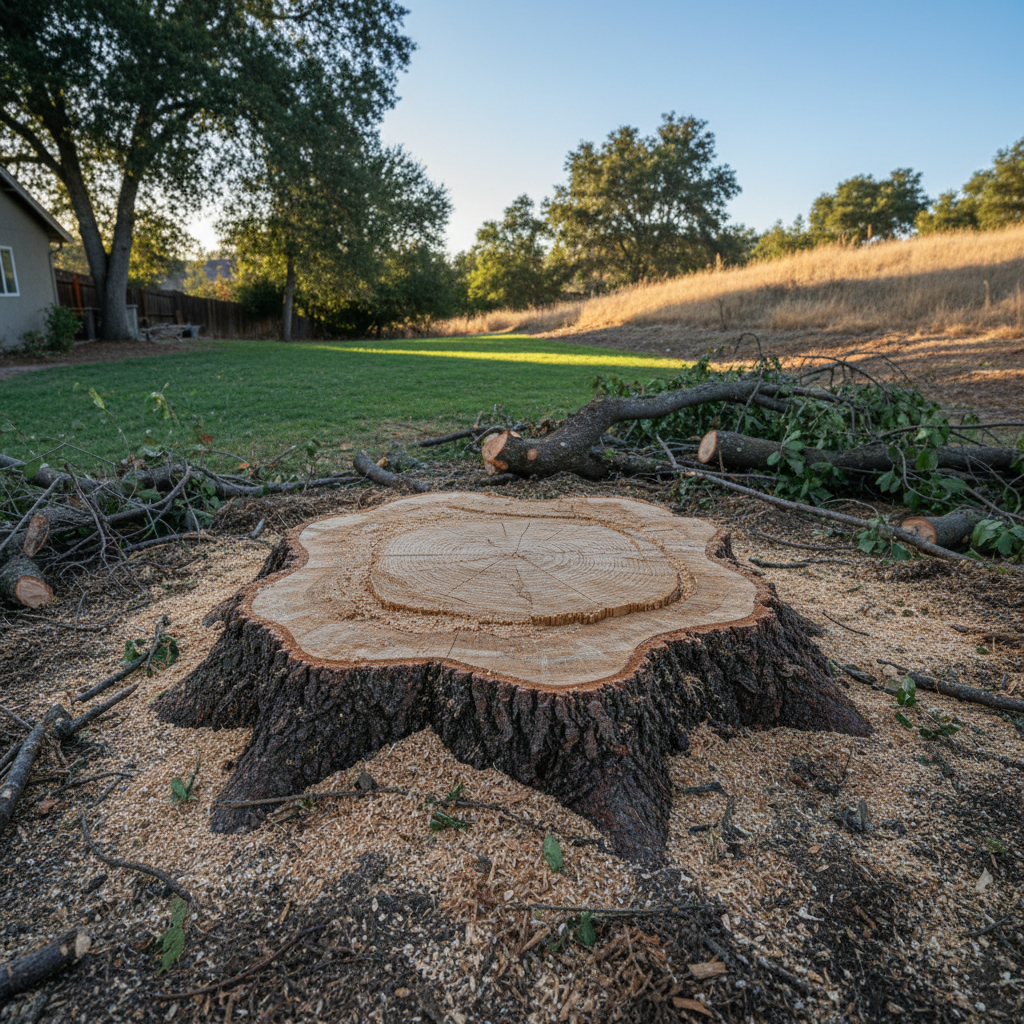
Alright, let's talk about tree removal. Maybe you've got a dead oak leaning a little too close to your roof, or a fast-growing sycamore that's just gotten too big for its britches. Whatever the reason, deciding to take down a tree isn't a small decision, and it's definitely not one to take lightly. As a local contractor, I've seen it all – good jobs, bad jobs, and some downright dangerous situations. So, here's what you need to know about tree removal, from start to finish, for your Fairfield home.
Before You Even Think About Cutting
First things first: is this really a job for you, or is it a job for a professional? This is the most crucial question. Don't let YouTube videos fool you into thinking every tree is a DIY project. Here's a quick breakdown:
- Small Stuff (DIY Potential): If it's a small sapling, a shrub, or a tree that's no taller than you can comfortably reach with a pole saw from the ground, and it's nowhere near power lines, your house, or your neighbor's fence, you might be able to handle it. Think small ornamental trees, not mature shade trees.
- Anything Else (Call a Pro, Seriously): If the tree is taller than your house, close to power lines, overhanging a structure, diseased, or just plain massive, you need to call a professional. Period. I've seen too many homeowners end up in the emergency room or with thousands of dollars in property damage because they underestimated a tree's weight and unpredictable fall.
Assuming you've decided it's a job for a pro, your next step is to get some estimates. Don't just pick the first guy who answers the phone. Get at least three quotes. Make sure they're licensed and insured – ask for proof! A good company will have no problem showing you their paperwork. Here at Apex Tree, we're always happy to provide ours. Also, ask about their approach to the job. Will they use a crane? Will they climb? What's their plan for cleanup?
One more thing: check with the City of Fairfield's planning department. Some trees, especially mature ones or those in certain zones, might require a permit for removal. You don't want to get hit with a fine because you didn't do your homework.
During the Removal Process
If you've hired a professional, your main job during removal is to stay out of the way. Seriously. Tree work is dangerous. Professionals have safety protocols, specialized equipment, and years of experience. They'll likely cordon off the area. Respect those boundaries. Keep pets and kids indoors. It's not a show; it's a high-risk operation.
If you're tackling a small, safe DIY project, make sure you've got the right gear. That means safety glasses, ear protection, gloves, sturdy footwear, and appropriate clothing. Don't wear loose-fitting clothes that can get caught in equipment. Plan your escape route for the tree's fall. Know where it's going to land and make sure that path is clear. Never stand directly under a falling tree or branch. Use sharp, well-maintained tools. A dull saw is more dangerous than a sharp one because it requires more force and can bind up.
Always cut in stages if possible. Don't try to fell a whole small tree in one go if you can safely remove branches first. This reduces the weight and makes the main trunk fall more predictably. And if at any point you feel unsure or unsafe, stop. It's okay to call a professional at that point. Better safe than sorry.
After the Tree is Down
Okay, the tree's on the ground. Now what? Cleanup is a big part of the job. If you hired a pro, they should handle all the debris removal, chipping, and hauling. Make sure this is explicitly stated in your contract. You don't want to be left with a massive pile of wood and branches to deal with yourself.
For DIY projects, you'll need to decide what to do with the wood. Can you chip it for mulch? Do you want to cut it into firewood? Or do you need to arrange for a green waste pickup? Remember, even small trees can generate a surprising amount of debris.
Then there's the stump. Some companies include stump grinding in their removal service, others charge extra. Make sure you clarify this upfront. A stump can be an eyesore, a tripping hazard, and can attract pests like termites, which we definitely don't want in our Fairfield homes, especially with some of the older neighborhoods around Travis Air Force Base. Grinding it down below grade is usually the best option if you plan to replant or put sod over the area.
Finally, consider what you'll do with the empty space. Will you plant a new tree? Lay down some grass? Or maybe create a new garden bed? Think about the long-term landscaping plan for your yard.
Tree removal is a serious undertaking. Whether you're doing it yourself or hiring Apex Tree, preparation and safety are key. Don't cut corners, and don't take unnecessary risks. Your home and your well-being are worth more than saving a few bucks on a dangerous job.
```