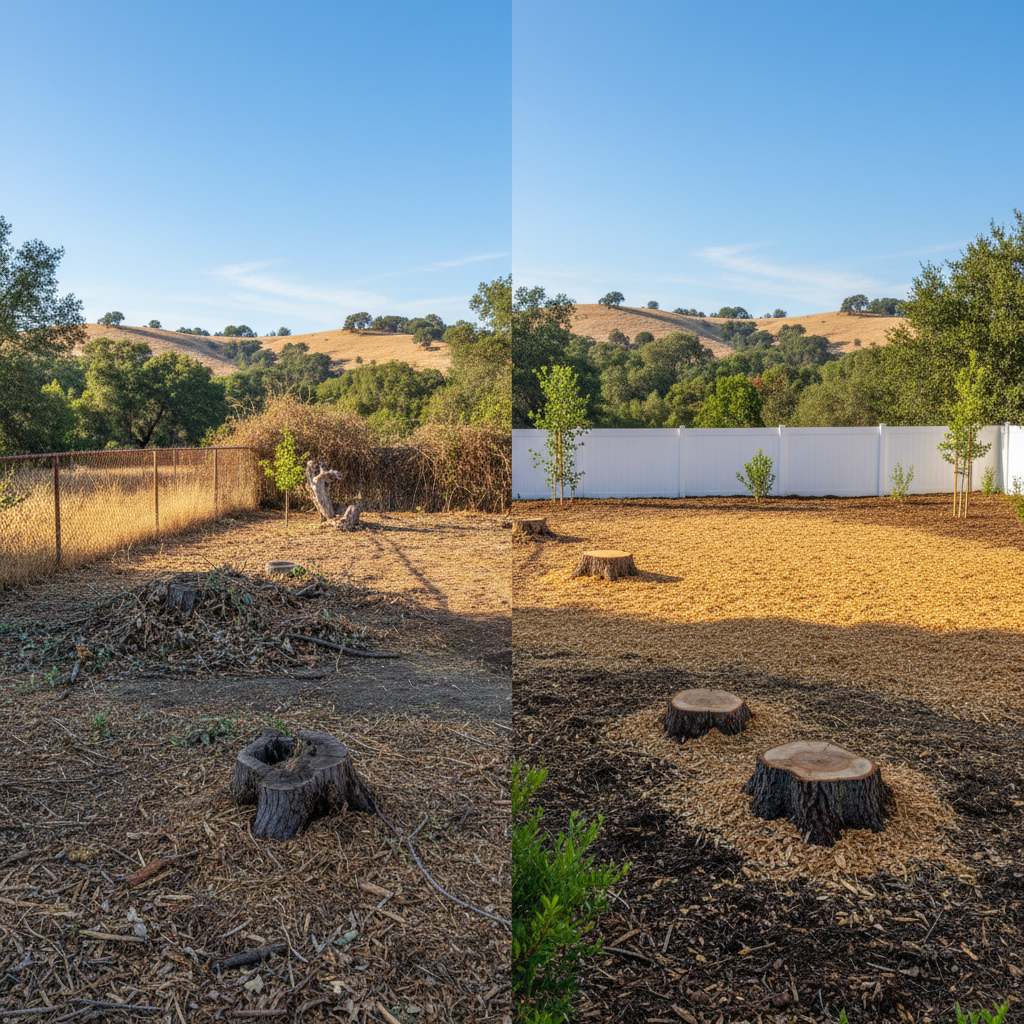
Got a piece of land in Fairfield that needs clearing? Maybe you're finally building that ADU, putting in a new garden, or just reclaiming some overgrown space. It's a big job, and you've got options. Two of the most common approaches I see homeowners consider are traditional excavation and forestry mulching. They both get the job done, but they do it very differently, and those differences can really impact your wallet, your timeline, and your land in the long run.
Traditional Excavation: The Heavy-Duty Approach
When I say 'traditional excavation,' think bulldozers, excavators, and dump trucks. This is the classic way to clear land. You bring in heavy machinery, rip out everything – trees, stumps, brush, rocks – right down to the bare soil. It's effective, no doubt about it.
The Pros of Excavation:
- Clean Slate: You get a completely clear piece of land. Every single plant, every root ball, every rock can be removed. If you need to dig foundations, lay pipes, or grade the land precisely, this is often the way to go.
- Stump Removal: Stumps are pulled out completely. No grinding needed afterward, no worries about regrowth from roots.
- Immediate Results: The land is cleared quickly, especially for smaller parcels.
The Cons of Excavation:
- High Cost: This is usually the more expensive option. You're paying for heavy equipment, fuel, operators, and then you've got the significant cost of hauling away all that debris. Disposal fees can really add up, especially if you're dealing with a lot of material.
- Soil Disturbance: Excavation can really mess with your soil. It compacts it, removes valuable topsoil, and can even change the drainage patterns. In areas like the Green Valley hills, where you might have more delicate soil structures, this can lead to erosion issues if not managed carefully.
- Environmental Impact: Hauling debris to landfills isn't the most eco-friendly choice. Plus, the machinery uses a lot of fossil fuels.
- Potential for Regrowth: If you don't get every single root, some species can still sprout back, though less likely than with just cutting.
Forestry Mulching: The Modern, Eco-Friendly Alternative
Forestry mulching uses specialized machinery – a mulcher head attached to an excavator or a dedicated mulching machine – that grinds up trees, brush, and stumps right where they stand. It turns everything into a layer of wood chips and organic material.
The Pros of Forestry Mulching:
- Cost-Effective: Generally, mulching is less expensive than excavation. You're not paying for hauling and disposal fees, which are often a huge part of the excavation bill. The machine does the work, and the material stays on site.
- Soil Health: This is a big one. The mulched material creates a protective layer over your soil. It prevents erosion, retains moisture, and as it breaks down, it enriches the soil with organic matter. This is fantastic for future landscaping or gardening.
- No Hauling: Everything is processed on site. No dump trucks, no landfill fees, less carbon footprint.
- Minimal Soil Disturbance: The machines are designed to be low-impact. They don't compact the soil nearly as much as a bulldozer, preserving the existing soil structure and beneficial microbes.
- Erosion Control: That layer of mulch acts like a blanket, protecting the soil from wind and rain, which is super important during our wet winters here in Fairfield.
- Weed Suppression: The mulch layer helps suppress new weed growth, giving you a head start on managing your cleared land.
The Cons of Forestry Mulching:
- Not a Bare Earth Finish: You won't get a perfectly bare, graded surface. You'll have a layer of wood chips. If you need to build immediately or lay sod, you might still need some light grading or soil amendment afterward.
- Stumps Remain (as chips): While the mulcher grinds stumps down to ground level or slightly below, they aren't completely removed. For some, this is fine; for others, it might be a concern if you're planting large trees in the exact same spot.
- Specific Equipment: Not every tree service has the right forestry mulching equipment. You need a specialized crew like us at Apex Tree to do it right.
Which One Should You Choose for Your Fairfield Property?
For most homeowners in Fairfield looking to clear overgrown areas, create defensible space, or prepare for general landscaping, I'm going to lean towards forestry mulching. It's usually more affordable, much better for your soil, and more environmentally friendly. The benefits of improved soil health and natural erosion control are huge, especially with our local climate and sometimes challenging clay soils.
However, if your project involves significant construction, like pouring a large foundation, installing extensive underground utilities, or you need a completely level, bare-earth surface for a specific purpose, then traditional excavation might be necessary. But even then, consider mulching first to clear the bulk of the vegetation, and then bring in smaller equipment for the fine grading.
Ultimately, the best approach depends on your specific goals for the land. Give us a call at Apex Tree, and we can come out, take a look at your property, and talk through the best option for your project. We've got the experience to help you make the right choice for your Fairfield home.